



















What does our design retainer agency include?
Our design retainer includes everything needed to take a piece of website or product work from idea to live: deciding what to do, writing it, designing it and building it. One flat fee of $6,000 a month covers the team, not a set number of hours or requests. We work from a priority list you control, and we join your customer and sales calls so the list reflects what buyers actually say.
It covers marketing site pages and campaigns, product screens and flows, design system upkeep, interface and page copy, and the code to ship all of it. What it doesn't cover: paid media, video production and large brand programs, which we'd scope separately.
How do design retainer models differ?
Design retainers come in three common models, and they suit different needs. The difference is what the monthly fee buys: a block of hours, a place in a request queue, or a team's ongoing attention. Before comparing prices, check which model you're being sold.
Hours-bank retainer | Unlimited request subscription | Team retainer (ours) | |
|---|---|---|---|
What you pay for | A fixed number of hours each month | A queue of design requests | A team's ongoing work on your priorities |
How work flows | Hours logged against tasks | Usually one active request at a time | One ranked list, worked in order |
Development | Sometimes, billed from the same hours | Often excluded or limited | Included: we build what we design |
Strategy and copy | Extra hours if included | Rarely included | Included, with customer call input |
Main risk | Hours run out or roll over unused | Throughput limits on complex work | Less suited to high volumes of small graphics |
Best for | Predictable, well-defined tasks | Ad, social and slide requests | Websites and products that need shipping |
If you're weighing an unlimited request service specifically, our design subscription page and the Designify vs Designjoy comparison cover that choice in detail. Our article on website care plans vs retainers covers the maintenance-only option.
What does ongoing design support look like month to month?
Ongoing design support means the team that knows your product keeps shipping the next most useful thing, without a new brief or quote each time. Some months that's one large piece of work, like a pricing model launch. Other months it's a dozen smaller fixes across the site and product.
- Website retainer work: new pages, campaign landing pages, CMS updates, pricing page changes and conversion fixes.
- Product work: new features, onboarding flows, settings and dashboards, built in your codebase.
- Design system upkeep: new components and tokens kept in sync between Figma and code.
- Launch support: announcement pages, changelog designs and in-product messaging for releases.
- Customer input: joining calls, reading support themes and turning them into the next priority.
Hypothetical example: one quarter on a design retainer
For example, suppose a seed-stage AI startup signs a retainer ahead of its Series A. In month one we rebuild the homepage message after hearing the same confusion on three sales calls, and fix the demo booking flow.
In month two the team launches a new integration, so we design and build its landing page, an in-product setup flow and a changelog entry. In month three we add customer stories, tidy the component library and redesign the settings screens that cause most support tickets. This is an illustration of how a retainer can run, not a real client result.
How does our monthly design retainer work?
Free intro call
Thirty minutes on your product, your backlog and whether a retainer or a fixed-price project fits better.
Trial week, if you want it
For $1,000 we take one real item from your list and ship it, so you judge the work before signing.
Onboarding audit
We review your site, product, analytics and existing files, and draft the first priority list with you.
Weekly rhythm
We share progress in your Slack or tools, review designs with you and agree each week's focus.
Design, build, ship
Each item is written, designed, reviewed and built, then checked live on desktop and mobile.
Monthly review
We look at what shipped and what we learned from customers, then reset priorities for the next month.
How much does a monthly design retainer cost?
Design retainers in the market run about $2,000 to $12,000 a month, as typical quoted ranges, depending on scope, seniority and whether development is included. Some studios also publish retainers that require a 12-month commitment, so check the term as well as the price. Our retainer is $6,000 a month, flat, billed monthly.
- per month, flat, design, copy and development
- $6,000
- a year on the retainer, build included
- $72,000
- for a trial week before committing
- $1,000
For comparison, hiring sources put a fully loaded in-house designer at $90,000 to $150,000 or more a year, with about two to three months to hire, and that buys design without development. Our retainer calculator lets you compare options with your own numbers, and our guide to design retainer pricing explains what drives the quotes you'll see.
When is a retainer better than a fixed-price project?
A retainer is better when the work doesn't end: you have a live product, a marketing site that changes with every launch, and more ideas than time. A fixed-price project is better when the scope is clear and finite, such as a new $8,000 website of up to six pages or a $6,000 landing page.
Pros
- No re-quoting each piece of work, so small fixes ship quickly
- The team keeps context about your product, customers and past decisions
- Priorities can change as the business changes
- Website and product work share one team and one standard
Cons
- Costs more than a one-off project if you only have one project
- Needs someone on your side to rank priorities and give feedback
- Less value if your requests are mostly small graphics
- In-house hires build deeper knowledge once work is full-time and constant
Our comparison of retainer vs project pricing walks through the decision in more depth.
What should you check before signing a design retainer?
Check who does the work, what's included, how priorities are set, and what happens when you stop. Most retainer problems come from terms nobody read: hours that expire, development billed as extra, or unclear ownership of files and code.
- Who works on your account: named people or a rotating pool, and who leads.
- Scope: whether development, copy and strategy are inside the fee or extra.
- Throughput: how many items are worked at once and how priorities are agreed.
- Term and notice: minimum commitment, notice period and whether you can pause.
- Ownership: who owns the Figma files, code and content, during and after the retainer.
- Reporting: how you'll see what shipped each month.
Which teams have we designed and built for?
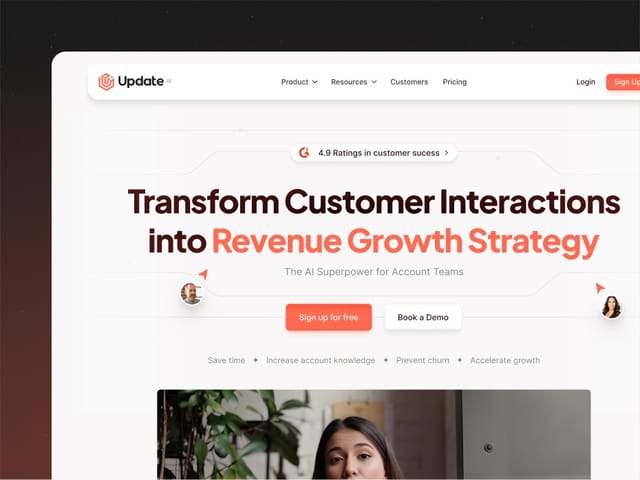
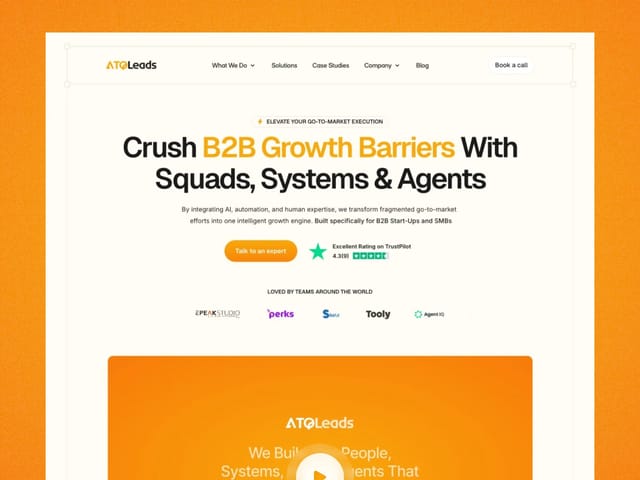
We handled website strategy, messaging, design and the build for Update.ai, an AI platform for customer success teams. We rebuilt the site for CSSInc AI, an enterprise IT consultancy selling into regulated sectors, and delivered a rebrand and full website redesign for ATQ Leads, a GTM agency. We also designed and built a multi-page site for Lakehouse Partners, a data and AI consultancy. Across 60+ projects, the pattern is the same: the work after launch matters as much as the launch.
What happens on the free intro call?
We spend 30 minutes on your backlog, your team and what's slowing you down. We'll tell you whether a retainer, a fixed-price project or the trial week is the right start, including when a retainer isn't worth it for you yet. Every offer and price is on our pricing section.